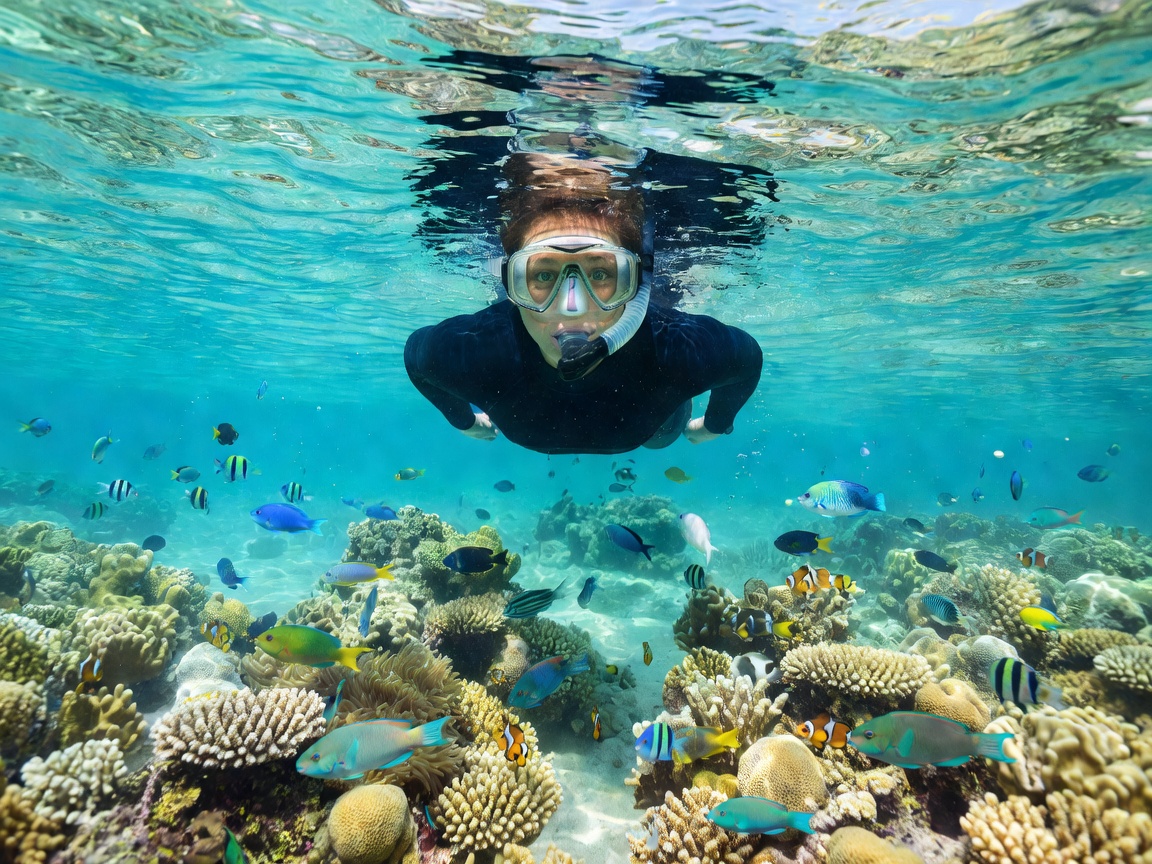
The sea is not a static backdrop. Wind, tide, swell, visibility and current can change during a stay, and the sheltered water near one island may differ from conditions beyond its reef. An activity listed by a resort or local provider is not guaranteed to operate every day. Confirm availability, supervision, equipment, cancellation arrangements and local requirements with the provider.
From the shore to the reef
Lagoon swimming and shore-based exploration can be a gentle starting point where access and conditions allow. Check the entry surface, water depth and any marked channels before swimming. A calm-looking surface does not establish that a location is safe; follow local notices and instructions.
Snorkelling may be guided or self-directed. A guided reef experience can help guests understand entry points, current, wildlife etiquette and reef features. Ask whether flotation aids, a guide and suitable equipment are available, and whether the route suits your confidence and swimming ability. Never stand on, touch or collect coral. Keep fins clear of the reef, and leave shells and marine life where they are.
Scuba diving involves specialist equipment, training and operator procedures. This guide is not a substitute for instruction or qualification requirements. Tell the provider your experience honestly, confirm what documentation is required and follow their briefing. A site described as nearby may still require a boat ride, and conditions can determine whether a planned dive proceeds.
Quiet ways to explore
Kayaking and paddleboarding are often non-motorised ways to explore sheltered water. They still depend on wind, currents, route choice and suitable supervision. Check whether equipment is provided, whether buoyancy aids are required, and whether there are age or experience rules. Keep clear of boat lanes and avoid paddling beyond the permitted area.
Sailing and private boat excursions vary from short sheltered-water outings to longer coastal trips. Ask who operates the vessel, what is included, where the route may go and how the plan changes in poor conditions. A private charter describes an arrangement, not a guarantee of a particular vessel or route. Confirm passenger limits, access, shade, refreshments and expected time on board.
Wildlife observation is best treated as an opportunity rather than an outcome. No sighting is guaranteed. Respect distance guidance, never pursue animals or ask a captain to interrupt feeding or resting, and do not touch or feed wildlife. Some locations may restrict access during nesting or other sensitive periods.
Choose by experience and access
| Activity | Often suits | Confirm first |
|---|---|---|
| Lagoon swim | Guests seeking a shore-based option. | Entry, currents, marked zones and supervision. |
| Snorkelling | Confident swimmers or guided beginners where supported. | Flotation, guide, access and reef conditions. |
| Scuba diving | Guests meeting operator training and experience rules. | Qualifications, medical considerations and site conditions. |
| Kayak / paddleboard | Guests comfortable with balance and open water. | Wind limits, safety gear, route and age rules. |
| Boat excursion | Guests interested in coastlines or offshore scenery. | Operator, vessel access, weather plan and cancellation terms. |
Families should check age guidance, child-sized flotation equipment, shade and the distance between activity points. Guests with mobility or sensory requirements can ask about boarding, transfer seats, steps, communication and access to facilities. Equipment sizes and accessible options are not universal, so share needs in advance.
Marine care is practical care
Follow local guidance and marine restrictions, even when they differ from familiar routines. Keep a respectful distance from wildlife, avoid disturbing nesting or feeding animals, and do not touch or stand on coral. Use sun protection suitable for the setting; clothing and shade can reduce the need to reapply products, and providers may have local guidance about products near reefs. Secure loose items before entering the water. Leave the site as you found it and take litter back to shore.
Ask whether local guides lead the outing, how the route avoids sensitive areas and what the provider expects guests to do if wildlife approaches. Do not assume that a marketing phrase such as “eco” or “reef safe” establishes an independently verified environmental standard.
Questions before you book
- Is the activity offered at this location during my dates?
- What weather or sea conditions could change the plan?
- Who leads the activity, and what briefing or supervision is provided?
- What experience, swimming ability or documentation is required?
- Are equipment, flotation and accessible boarding options available?
- What is the cancellation or rescheduling policy?
- Are there local wildlife, reef or protected-area rules to follow?
Good for
Guests who enjoy coastal discovery and are willing to match activity choices to ability, local instruction and daily conditions.
What to know
Availability varies by location, weather, season, facilities, operator and local regulation. General editorial guidance is not professional training or a substitute for a safety briefing.
Related guides
Compare island regions · Prepare for transfers and activities · Consider room and water access